


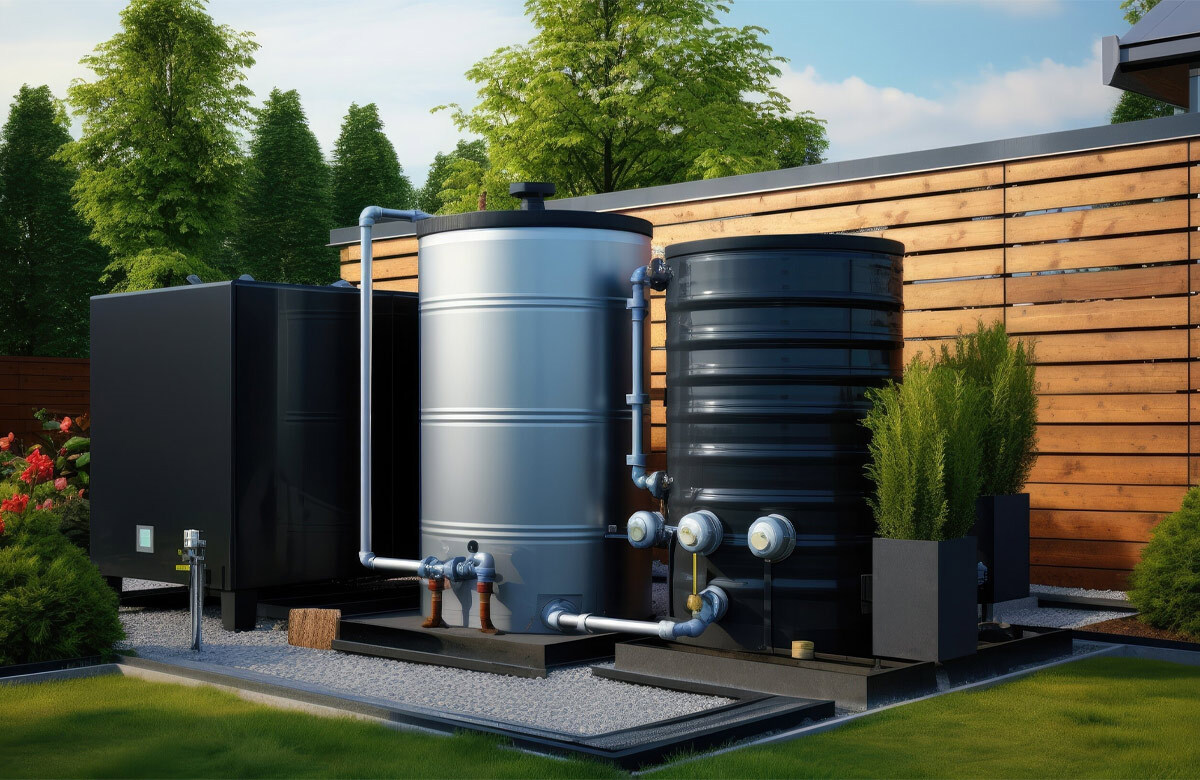
Things to consider when setting up a home water backup system
Water supply disruptions are becoming an increasingly common reality across South Africa, placing pressure on households to find practical ways to secure access to water.
In provinces such as Gauteng, recent infrastructure maintenance has highlighted the scale of the challenge, with planned outages leaving some communities without reliable supply for extended periods.
These disruptions are not isolated incidents, but part of broader systemic issues including aging infrastructure, maintenance backlogs, and growing urban demand. Against this backdrop, water storage and backup systems are shifting from “nice-to-have” to essential household infrastructure.
Start with your household’s actual water needs
According to Mauritz Swartz, Plumbing & Water Buyer at Builders, the most effective starting point is understanding daily consumption.
“Households should first determine how many days of water they want to store and then calculate usage accordingly. As a general guideline, daily consumption averages around 150 litres per person, but during shortages this can be reduced to approximately 80 litres per person,” he explains.
Property type also plays a role in system design. Multi-storey homes, for example, require higher-capacity pumps to maintain water pressure across levels, while single-storey homes typically require less complex setups.
Storage alone is not sufficient. Filtration plays a key role in maintaining water quality, particularly where municipal supply may already be compromised. A sediment filter is one of the most important components in any system. It removes sand and debris before water enters the tank. Without proper filtration, contaminants build up, increasing maintenance requirements and affecting water quality.
Matching solutions to different household budgets
While solutions vary widely in cost and complexity, the core components remain consistent: a storage tank, pump, connectors, and filtration.
- Entry-level systems typically include smaller tanks (around 1,000 litres) and basic pumps, suitable for partial backup during short outages.
- Mid-range systems expand capacity to around 2,000–2,500 litres, offering more consistent supply for families during extended disruptions.
- High-capacity systems (5,000 litres and above) are designed for larger households or longer outages, often incorporating more advanced pump and pressure systems.
Installation requirements and additional components can influence final costs, and professional advice is recommended to ensure systems are fit for purpose.
Water resilience is now becoming part of long-term household planning. Rather than reacting to outages as they occur, more South Africans are proactively investing in systems that provide a level of independence from municipal supply disruptions.
DIY and home improvement store Builders offers a range of water back up and filtration solutions that make it easier for households to get through the next water outage. Here’s a quick guide of what you’ll need from Builders for a water back-up solution for different types of households :
Back Up Water Solution For a Small Home
Eco slim tank 950l
Max perf booster pump 0.37kw
Booster pump protection cover
Quick fit connector kit pump to tank
Builders inline filter 25mm 130mic BLK
Back Up Water Solution for a Medium Home
Water Tank Vertical 2400lt
JoJo Centrifugal Pump 0.75kw Or Max Perf Booster Pump 0.75kw
Booster Pump Protection Cover
Quick Fit Connector Kit Pump To Tank
Builders Inline Filter 25mm 130mic Blk
Back Up Water Solution for a Large Home
Eco Water Tank Vert 5050lt Or JoJo Water Tank Vertical
JoJo Centrifugal Pump Or Max Perf Booster Pump 0.75k Or JoJo Booster Pump Vsd 0.75kw
Booster Pump Protection Cover
Quick Fit Connector Kit Pump To Tank
Builders Inline Filter 25mm 130mic Blk
The products listed above are the minimum basic requirements; additional accessories may be needed depending on the installation. Customers can also enquire about the various financing options that Builders offers to purchase these water solutions.
For more information, visit www.builders.co.za or follow them on their social media platforms.